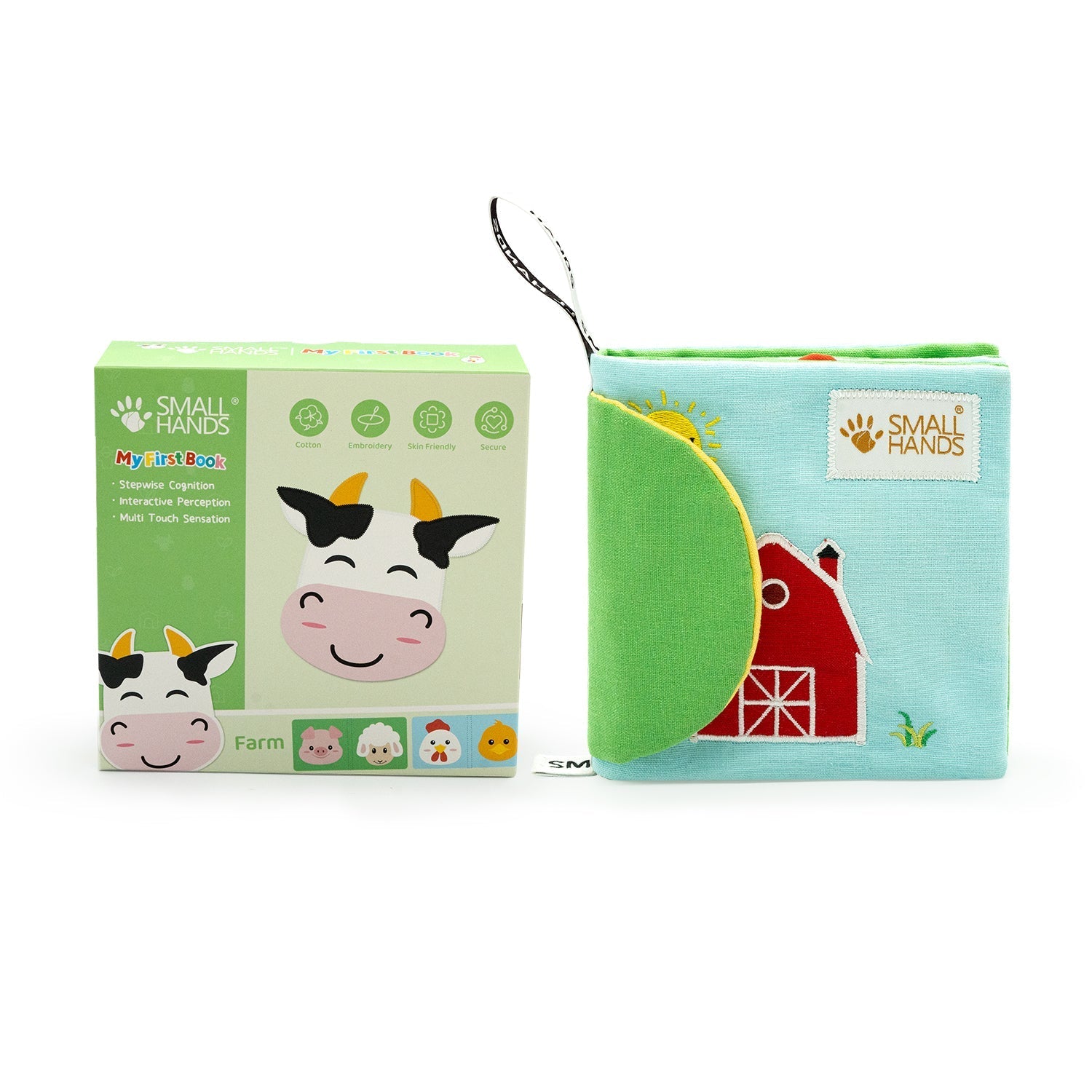
 Nature & Animals
 Food
Food
 For the birth
 Fantasy & Adventure


The best Montessori toy always depends on your child's stage of development. For babies (0–12 months), safe, graspable materials in wood and fabric matter most. Toddlers (1–3 years) need activities for fine motor skills – a real alternative to the tablet. From 3 years, learning and preschool take centre stage. Here's how to find the right toy.
What actually makes a toy Montessori?
Montessori toys are deliberately simple. They let your child do things themselves, rather than just watch. No buttons that flash, no melodies at the push of a button – but real grasping, slotting, opening and closing. Made of natural materials, comfortable in the hand, and they grow with little abilities. That's exactly why we work with wood and fabric instead of plastic and screens.
Which Montessori toy suits which age?
The short answer: the younger your child, the more important safety and material quality are. With each year, the toy may challenge a little more. This table gives you a quick overview:
| Age | Developmental focus | What to look for | Suitable products |
|---|---|---|---|
| 0–12 months | Grasping, touching, first sensory experiences | Non-toxic, mouth-safe, rounded, easy to grip | Small Hands wooden toys |
| 1–3 years | Fine motor skills, concentration, independence | Zippers, buttons, laces – screen-free activity | Quiet Books (fabric books) |
| 3–6 years | Learning, language, preschool | Themes & stories, numbers, letters, longer tasks | Themed Quiet Books |
0–12 months: safe grasping and the first gift
In the first months, your baby explores the world with hands and mouth. Everything goes up to be tasted. That's why one thing comes above all here: safety. Look for materials tested for harmful substances, rounded shapes and parts that are easy to grasp.
Our Small Hands line is made exactly for this – Montessori wooden toys that sit well in little hands and accompany the first sensory experiences. It's also a wonderful gift for a birth: something that lasts, instead of disappearing into the box after a few weeks.
👉 Discover our products for 0–12 months
1–3 years: fine motor skills instead of a tablet
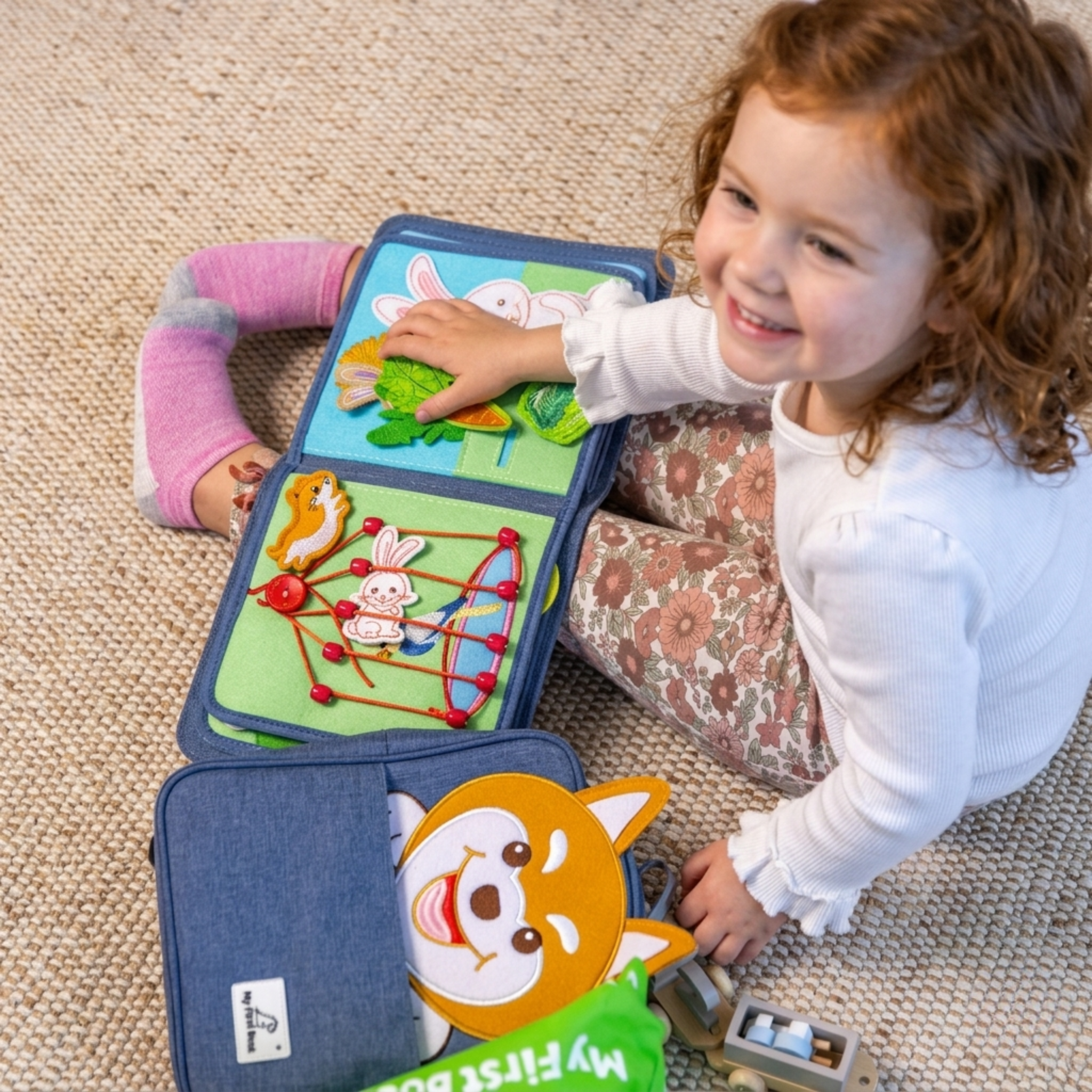
Now your child becomes a little explorer. They want to open, close, thread, slot – again and again. This is the moment for our Quiet Books: soft fabric books with zippers, buttons, laces and hook-and-loop fasteners on every page. Every task trains fine motor skills and builds concentration.
And yes – they're probably the loveliest alternative to the tablet. If you feel your child sits in front of a screen too often, a Quiet Book puts something in their hands that keeps them busy without overstimulating them. The included backpack makes it the perfect companion on the go – restaurant, car, waiting room.
👉 To the Quiet Books for 1–3 years
3–6 years: learning and preparing for preschool
From three years, children play and learn. Your child recognises stories, asks questions, wants to understand numbers and letters. Our themed Quiet Books – from the farm to space – tell little worlds and hide within them tasks that prepare for kindergarten and preschool.
Here variety matters: longer tasks, role play, first counting and matching. Toys that think along, instead of just keeping busy.
👉 To the learning Quiet Books for 3–6 years
Why screen-free Montessori toys?
Because your child learns by doing, not by watching. Screen-free play strengthens concentration, patience and little fingers – everything that matters later in kindergarten and school. Our books are made of soft fabric, tested for harmful substances and built to survive even the tenth nursery chaos. It's no wonder they are loved by over 1 million children worldwide and at home in more than 20 countries.
Frequently Asked Questions (FAQ)
From what age do Montessori toys make sense?
Right from birth. In the first months it's about grasping and touching with safe wooden and fabric toys. From around one year, fine motor tasks come in, and from three years first learning content. What always matters: suitable for your child's stage of development.
Is a Quiet Book a good alternative to the tablet?
Yes. A Quiet Book keeps your child busy with real hand movements – opening, closing, threading – instead of a screen. It encourages fine motor skills and concentration and, thanks to the backpack, is ideal for on the go. Many parents use it for exactly that: a calm activity without a screen.
Are the materials non-toxic and safe for the baby?
Our products are made from non-toxic, child-friendly materials. Especially with babies who put everything in their mouth, we pay particular attention to rounded, safe workmanship. When buying, always look for relevant tests and age-appropriate guidance.
Which Montessori toy makes a good gift?
For babies, Small Hands wooden toys are a lovely gift for a birth. For children from one year, a Quiet Book is a real highlight – gift-ready with a backpack, durable and awarded the German Toy Award 2025. A gift that really gets used.
In summary
The best Montessori toy is the one that suits your child's age: safe wood for babies (0–12 months), fine-motor Quiet Books for toddlers (1–3 years) and learning-rich themed books for preschool (3–6 years). This way every toy supports exactly the step your child is taking right now – screen-free, durable and made with love.