 Nature & Animals
 Food
Food
 For the birth
 Fantasy & Adventure


Quiet Book, Activity Book, Busy Book, cloth book and touch book sound similar – but they don't mean the same thing. A Quiet Book (cloth book/busy book) is a soft felt book with buttons, zippers and ribbons for fine motor skills. A touch book trains the sense of touch, while an activity book keeps kids busy with tasks and puzzles.
In the first years of life, books accompany your child through every developmental step. But the English terms often cause confusion: is a busy book the same as a Quiet Book? And how does a touch book differ from an activity book? Here are the answers – mum to mum, clear and to the point.
What is a Quiet Book?
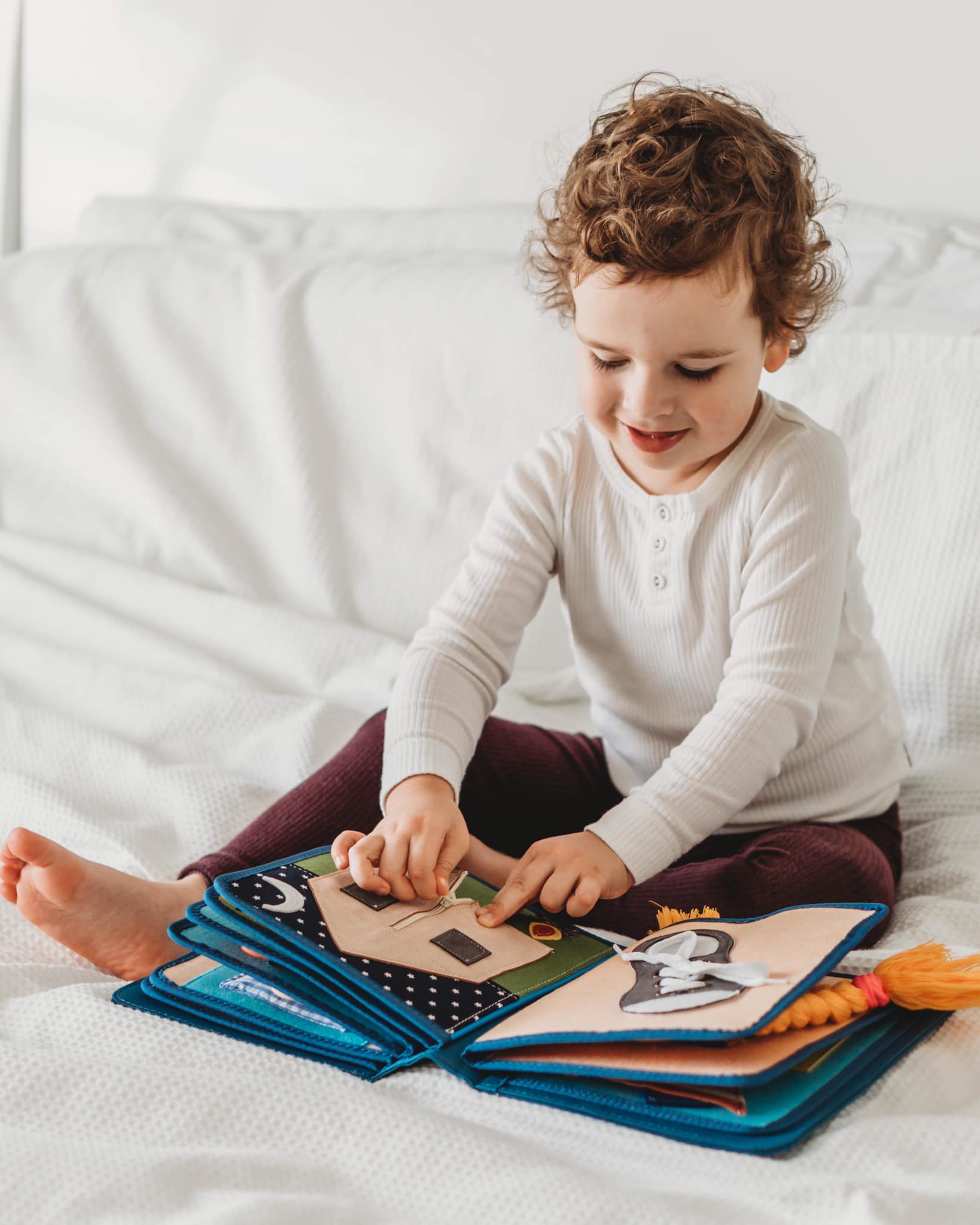
A Quiet Book – also called a cloth book or busy book – is a handmade book made of soft materials such as felt or fabric. On every page your child finds a different activity: buttons to open, zippers to pull, laces to thread or ribbons to tie.
The name comes from the fact that these books keep your child calm and focused – ideal for car journeys, restaurant visits or quiet moments at home. At the same time, they playfully encourage fine motor skills, concentration and independence. You can read more in our detailed guide What is a Quiet Book?
Quiet Book, Activity Book or Busy Book – what's the difference?
The short answer: Quiet Book, cloth book and busy book usually mean the same thing – a soft activity book made of felt or fabric. “Activity Book” is used more broadly in English and often also refers to classic paper activity books with puzzles and colouring tasks.
A touch book, on the other hand, is clearly distinct: it's all about textures and the sense of touch, not tasks. The table below gives you a quick overview.
| Term | What's behind it? | Mainly encourages | Suitable age |
|---|---|---|---|
| Quiet Book / cloth book / busy book | Soft felt or fabric book with interactive elements (buttons, zippers, ribbons) | Fine motor skills, concentration, independence | approx. 1–6 years |
| Touch book | Book with different materials and surfaces to feel | Sense of touch, sensory perception | approx. 0–12 months |
| Interactive book | Book with flaps, sliders, sounds or effects | Curiosity, understanding of cause and effect | approx. 1–4 years |
| Activity book | Activity book with tasks, puzzles, colouring pages and mazes | Problem solving, creativity, logical thinking | approx. 3–6 years |
From what age does which book make sense?
Babies from 0 to 12 months explore their world through grasping and feeling – for them, touch books are ideal. Our “Small Hands” range is made exactly for this stage.
From around 1 year, children want to become active themselves: opening, closing, threading, pulling. Now it's time for Quiet Books and interactive books. Our “My First Book” range accompanies children from 1 to 6 years – you'll find suitable models in the collection Books for 1–3 years.
For preschoolers aged 3 to 4 and up, the tasks can become more complex – this is where activity books with puzzles and logic games come into play.
What should you look for when buying?
- Material and safety: Look for non-toxic materials and clean workmanship – especially if your child puts everything in their mouth.
- Workmanship: Firmly sewn small parts and sturdy seams withstand even curious little hands.
- Age-appropriate activities: Choose elements that match your child's stage of development – neither too easy nor too demanding.
- Care: Washable cloth books stay hygienic and beautiful for longer.
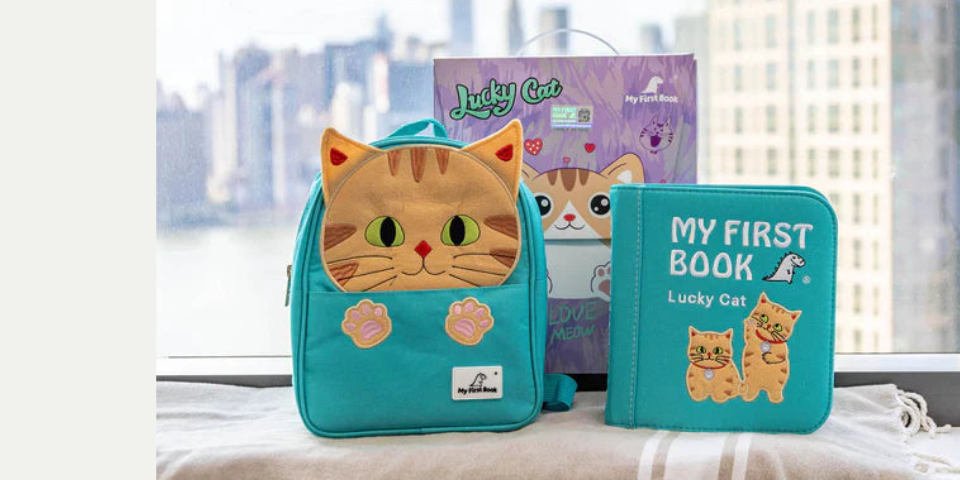
At My First Book, for example, all Quiet Books are made from materials tested for harmful substances and come with a matching backpack – ideal for on the go.
My First Book was awarded the German Toy Award 2025, already accompanies over 1 million children and is at home in more than 20 countries – a good reference point if you value proven quality.
Conclusion
Each format has its strength: touch books train the youngest children's sense of touch, Quiet Books, cloth books and busy books encourage fine motor skills and concentration, interactive books spark curiosity and activity books train thinking. This way you'll find the right book for every developmental phase of your child – and give them joy in learning and discovering.
Frequently Asked Questions (FAQ)
Is a Quiet Book the same as a busy book?
Yes, in most cases. “Quiet Book”, “busy book” and “cloth book” all mean the same thing: a soft activity book made of felt or fabric with interactive elements such as buttons, zippers and ribbons.
What is the difference between a Quiet Book and a touch book?
A Quiet Book mainly encourages fine motor skills through activities such as threading and buttoning. A touch book focuses on different textures and trains the sense of touch – it's especially suitable for babies.
From what age is a Quiet Book suitable?
Quiet Books are generally suitable from around 1 year up to about 6 years. For babies under 12 months, touch books are the better choice because they specifically support sensory development.
Are Quiet Books safe for toddlers?
High-quality Quiet Books are made from non-toxic materials and have firmly sewn small parts. Look for clean workmanship and sturdy seams – then the book is a safe companion for little explorers.
What is an activity book?
An activity book is a book full of tasks such as puzzles, mazes and colouring pages. It encourages problem solving, creativity and logical thinking and is mainly suited to preschoolers from around 3 years.
What is a busy book?
“Busy book” is another name for a Quiet Book or cloth book: a soft felt or fabric book with interactive elements such as buttons, zippers and ribbons that keeps children calm and focused – ideal for on the go.